
The Uncommon Leader Podcast
Are you ready to break free from mediocrity and lead an extraordinary life? Join us on The Uncommon Leadership Podcast as we explore the power of intentionality in personal and professional growth. Our podcast features insightful interviews with inspiring leaders from all walks of life, sharing their stories of overcoming challenges and achieving greatness.
Discover practical strategies to:
- Think positively and cultivate a growth mindset
- Live a healthy and balanced lifestyle
- Build your faith and find inner strength
- Read more and expand your knowledge
- Stay strong in the face of adversity
- Work hard with purpose and passion
- Network effectively to build meaningful relationships
- Worry less and focus on what matters
- Love always and make a positive impact
In each episode, we'll dive into relevant leadership topics, share inspiring stories, and provide actionable steps you can take to elevate your life. Whether you're a seasoned leader or just starting your journey, The Uncommon Leadership Podcast offers valuable insights and practical guidance to help you achieve your goals and live your best life.
The Uncommon Leader Podcast
Episode 197: What Got You Here Won't Get You There; However, Eric Pfeiffer Reveals Your Next Level of Growth
Growth rarely stalls because the team isn’t smart enough; it stalls because everyone is running a different playbook. We sit down with Eric Pfeiffer to explore a leadership operating system that replaces drama with trust and equips people to think clearly under pressure. Instead of chasing a new tactic for every fire drill, Eric shows how a compact set of tools can align how your team communicates, decides, and learns—so talent compounds and execution speeds up.
We start with the hard truth about complacency and the “law of the lid”: organizations cap out where leaders stop growing. From there, we dig into symptom versus system thinking. Missed handoffs, slow decisions, and tense meetings are signals of deeper root causes—unspoken norms, conflicting assumptions, and inconsistent accountability. Eric lays out why a shared operating system acts like SOPs for humans, giving teams a common language for conflict, feedback, and ownership. His sports analogy hits home: elite players still lose without a shared playbook; companies do too.
The highlight is a high-stakes story. After a confidential pricing file was sent to every vendor, the exec team veered into blame until someone paused and drew the “Kairos” framework on the board. In minutes, the mood shifted from fear to focus. They owned the mistake, aligned the response, and not one vendor defected. More important than the outcome was the reflex they rewired: under pressure, they chose a shared process over old habits. That’s the promise of a real operating system—fewer fire drills, faster learning loops, and a culture where leaders train capacity instead of renting fixes.
If you lead a growing team, this conversation is a field guide for the moments that matter. You’ll hear how to diagnose root issues, codify a simple playbook, and train weekly so the right habits stick when the game speeds up.
🎙️ Listen Now: https://coachjohngallagher.com/podcast/
Download and share this episode to build Uncommon Impact among the leaders you know.
Connect with Eric Pfeiffer:
➡️ https://mpwrcoaching.com/
➡️https://www.linkedin.com/in/eric-pfeiffer-53964b173/overlay/contact-info/
Thanks for listening in to the Uncommon Leader Podcast. Please take just a minute to share this podcast with that someone you know that you thought of when you heard this episode. One of the most valuable things you can do is to rate the podcast and leave a review. You can do that on Apple podcasts, or rate the podcast on Spotify or any other platform you listen.
Did you know that many of the things that I discuss on the Uncommon Leader Podcast are subjects that I coach other leaders and organizations ? If you would be interested in having me discuss 1:1 or group coaching with you, or know someone who is looking to move from Underperforming to Uncommon in their business or life, I would love to chat with you. Click this link to set up a FREE CALL to discuss how coaching might benefit you and your team)
Until next time, Go and Grow Champions!!
Connect with me
Hey, listen, I can come in every week and help you solve a new problem. But here's the reality. I'm just using these tools to help you solve a problem. And over the course of the next 12 months, maybe we solve 30, 40, 50 problems.
SPEAKER_00:Hey Uncommon Leaders, welcome back. This is the Uncommon Leader Podcast. I'm your host, John Gallagher. I've got a second time guest for us today. Eric Pfeiffer was with me about 15 months ago to talk about a couple of his books and leadership and his coaching company, a lot of things. And I'm here to bring him back because he's got another book out, Upgrade Your Leadership: Eight Foundational Tools to Overcome Drama, Build Trust, and Thrive Under Pressure. Now, while we'll talk about the book, I'm pretty jazzed up just talking about Eric because we had a fun conversation last time. And I'm sure we're going to have a fun conversation this time as well. Just, I mean, we got connections here in the Myrtle Beach area, South Carolina. We got connections in leadership and the passion that we have as coaches. And I know this conversation is going to be a great one. Eric Pfeiffer, welcome back to the Uncommon Leader Podcast. How are you doing?
SPEAKER_01:I'm doing awesome, John. Thank you for having me back. And by the way, for whatever it's worth, I think your listeners also need to hear some of that conversation about you doing this crazy race with some of your friends. I mean, just an inspiration to me. I'm almost 50. I know you're just a few steps ahead of me. And so as I'm entering into my 50s, I've been starting to think like, you know what? I want the next 20, 30 years to be awesome years, healthy years, years that represent fitness, the best version of me. So, anyways, when you were sharing that anecdote before we jumped on, I just thought, my gosh, man, I want to do this. What was it called?
SPEAKER_00:The Spartan races. Yeah, the Spartan Sharfecta. Yeah, we could talk about the stadion that I did in Fenway Park, which was separate kind of from that another Spartan. But yeah, I mean, this one in about me. Folks can read about that in the Champions Brew, but I'd love to talk about it more. And if you want to join us on the journey, like I said, we haven't decided exactly what we want to do. And we being the small group of 50 plus guys, I got. So we let you in the club at 49. We had one guy turn 50 during the year. So we'll get that part coming out and things like that. But it was quite the journey. And as leaders, we talked about this. You know, it's been 15 months since you and I last chatted and how fast that been. It almost feels like, you know, forever ago in terms of what we did, but also feels like just a couple weeks ago and having that conversation. Time goes by fast. And so if we're going to get healthy and we want to, you know, think about that, it's time to uh you know put that uh goal on the list there and make it happen. So I'd be happy to chat more with you about that. But one of the things I want to jump right into with a conversation standpoint, and and we're gonna talk about Bob. In the introduction to your book, you talk about this guy and problems that you face as leaders. And I often have used this word, uh, should heads, uh, that leaders end up being where they ultimately say, hey, you should do this, you should do that, and get that done. And I'm telling leaders not to be should heads. We don't want them to do that. Is that something of what you're running into? Like these guys like Bob, they're new leaders. Uh they've, in essence, started their business or come into it, growing it on their own, and now they have trouble to delegate. What is it that you're seeing when you're coaching these types of leaders?
SPEAKER_01:Yeah, you know, Bob's a very interesting story because he was actually a longtime leader within this company. He was a divisional head over the finance department. Uh, he's a great example of what I see very often, which is a company's growing. We bring in competent individuals who can provide whatever particular service we're looking for. But then over time, what we neglect often in our organizations is any attention to their ongoing development as human beings, as leaders, as team leaders, as culture developers. And so we celebrate the particular job-related skills they bring to the table. But over time, as this company, for example, in the book, as you know, and and Bob is, you know, I'm that's obviously just a name I've I've attached to, really an experience I've had multiple times. Uh very often what happens is as the company grows, uh, people have to take on more and more responsibility, which requires more and more leadership skills, which, if those aren't invested in those individuals, uh they eventually plateau in their ability to operate well within a growing organization. And I see this all the time. And so going into work with this company, and they recognized this deficiency, committed themselves to saying, okay, well, we do want to pay attention to our leadership culture here. And Bob was one of those individuals who decided, hey, you know what, I've gotten along this far in my life and in my career without having to develop these skills. If there's a problem, it's not with me, it's with everybody else around me. Um, and that ended up in a sad situation where he had to move on to a different company. But but the point is, I see this all the time, whether it's leaders who are unwilling to invest the time and energy into the people in their organization to help them develop their leadership skills, or people who are being asked to develop their leadership skills who decide, you know what, I've gotten this far. Why do I need to learn anything else? Old dogs can't learn new tricks. You know, there's a million excuses out there, but this is as common as the companies we work with.
SPEAKER_00:Love that. And you know when I think about that, Eric, the the word, and I we we talked about this uh before we kind of hit the record button, but it was this word that I see as like complacency as a leader. We we're good enough in terms of who we are. You know, the responsibility lies in somebody else. And you know, one of the leading experts in the leadership space, John Maxwell, in his book, 21 Irrefutable Laws of Leadership, he paints this so well, the law of the lid, that our organizations are only going to grow uh as far as we grow as leaders. And once we stop growing, then our team stops growing. And I think you do a phenomenal job, again, throughout the book talking about that to say, first of all, it's a choice that the leader has to make, they have to develop themselves and ultimately uh put that in place. But they also have to recognize that they have to develop their team. If they're going to grow, if they're going to scale what's happening, they're going to have to develop their team as well. Now, it's been 15 months since we've chatted. MPWR coaching has been an organization that's growing, and you talked about that a little bit beforehand. What have you had to do as a leader? What are some you know, habits and disciplines you've had to put in place, or maybe this helps to inform a little bit of what your book's about. You know, you wrote it about you, maybe in terms of what's happening to grow and to make sure that your team keeps developing as well.
SPEAKER_01:Well, there's no question. I, you know, even in the book, you know, I say, you know, there's a bob in all of us, right? Because regardless of where we are at in our journey, uh at the beginning, or maybe we're seasoned leaders and veterans within an organization, the the truth is uh what you know, there's an old saying, what got us here won't get us there. And so, you know, as we're seeking to grow, as we're seeking to increase our influence and impact to become more successful, uh, the success that we're looking for in the future, I really believe is born out of, you know, new breakthroughs and more success internally for us as people, as leaders. And so for myself within our organization, you know, I often tell my team, I will lament openly to them, hey guys, I'm very aware that our coaching business can only move at the speed at which I can move. And even though I've hired incredibly competent, capable people of integrity and great character, and we just have this incredible team. Uh, they're all smarter than me, they're all more skilled than me in so many different areas. And yet, as a leader over this team, I am constantly reminding them like I have to do my own work. And so, in many ways, I'm not only committed to doing my own work, uh, but that's really the kind of seedbed for this book, which kind of reveals the full toolkit that we refer to as a leadership operating system, because I have spent the better part of the last, you know, 25 years trying to figure out how do I unlock more of my own potential as a human, as a leader. And then finding out what works for me and sharing it with others and to the degree it works with others, then you know, that's where the coaching business was born out of. And so the book is really a reflection of hey, here are the core leadership principles, uh, behaviors, ways of operating that have helped me unlock more and more of my growth trajectory, which then translates into the growth trajectory of anything I'm leading, my current coaching business, my family, and my marriage, on and on and on. Um, but it's also been what we have found has uh helped so many other leaders, teams, and organizations unlock more of their potential. And it's really interesting because most of the companies that, you know, I have a team of coaches, and so we work with companies of all different sizes. I tend to work with some of the larger ones. And what's really fun is when leaders who have already achieved a significant level of success, and we're talking about people who are worth billions, hundreds of millions of dollars, who have built multiple significant, you know, business assets through their life, who come to a kind of crossroads where they realize, okay, is this it? Is this all there is? Have I achieved everything I need to achieve? And then all of a sudden, they kind of said, no, there's more for me. And I want to achieve more, but they feel stuck. I don't know how to get to that next level. I feel a little plateaued. I feel like maybe I'm a little stuck. And, you know, that's one of my favorite places to enter in with leaders and organizations to say, you know, whether it's a small organization that's trying to get to the next level, a company who's ready to scale, uh, people who are willing to wanting to take on, you know, new projects, new adventures, whatever the case is, as human beings, I think we're all hardwired to want more, to believe in more. Well, the reality is the more that we're looking for out there starts inside of us, like I said earlier. And so what this toolkit is really designed to do is to equip people to continue to unlock the next level of character and competence and capacity so that that dream, that vision of the next thing that they're fighting for can become a reality.
SPEAKER_00:I love that. And I, you know, the thing that I caught on to is you know, reaching their potential or unrealized potential that exists. They're probably doing pretty good. And I'll talk about this. I'll have different conversations with leaders in small groups of leaders, and I say, rate yourself on a scale of one to five. And those leaders that you're talking about are frankly are not the fours or the fives. They're the twos or the threes who rate themselves a little bit lower and recognize they have the need for improvement. So you have to see this, you have to run into this all the time. How do you make them aware of what that gap is? Maybe you have one of the tools inside of your book that helps them see that gap. How do you make them see where they are today, which in the definition of the traditional world, it would say they're pretty successful, but unlocking what could be their potential as well. I often say, what do they leave on the table? How do you make them see that?
SPEAKER_01:Yeah, that's a great question. Uh so the way that we, our methodology is really similar to like when you go in to see the doctor. You might go in to see the doctor on an annual basis to do a checkup. They run some blood work, they kind of, you know, poke around, how you feeling, how you doing, how you sleeping, how's your diet, your weight, blah, blah, blah. And so they're and we do that with companies. Like companies will come to us and say, hey, we'd just love you to come in and assess how we're doing uh to help us identify where we're doing well and maybe some areas where we're maybe could be doing better. Great. And that's fun. I would also say that's the rarity. Most leaders or organizations that come to us, it's because they're feeling pain points. And so they come to us, say, hey, doc, you know, I'm experiencing these difficulties, my elbow hurts, my knees, my this, I'm not sleeping well, I'm gaining too much weight, I feel lethargic, whatever the case is. They're coming to us with symptoms that would suggest to them, hey, something's not working right. And it could be pain points that they're experiencing within their teams, right? Lack of communication, lack of ability to resolve conflict, they're not collaborating well. It could be, hey, we've grown, like one of the companies I work with currently, you know, they grew from literally like 25, 30 employees to 200 in the span of like three or four years. And so that created a lot of pain points across a lot of different areas of the company. Whatever the case is, they're experiencing a pain point. They come. And our job utilizing our toolkit is to help them to recognize the symptomatic issues, the things that they're experiencing, that they can see, touch, feel, hear, smell, whatever. And then what we do is help them like think of a cross-section of a tree, right? Above ground, you see the tree and how it's growing. But what most people don't know how to understand is the root system below ground. The root system is the systemic dynamics that are going on in any individual team organization that is constantly producing the results they're experiencing. So, what we do is help them understand the symptoms. Then we help them to see where in the systemic dynamics of how they're operating, their attitudes and behaviors, their culture, their communication structure, their organizational structure, whatever the case is, to help them identify, hey, where systemically are you operating in a way that's continue, it's going to continue to produce these pain points if they don't change. And then what we do is help them go on a journey of dealing with those systemic uh dynamics that will lead to long-term sustainable transformation and health and benefits that they're really looking for.
SPEAKER_00:I love that. When I when I listen through on that, I again we're in similar worlds in terms of coaching uh organizations that are in that space. And I think about these back to Bob again, even at your introduction, uh, where you know many leaders will say, I really don't care how they get it done. I just need them to get it done. And we run into this and they got five or six different ways on their leadership team that they're trying to solve problems. Theoretically, in your mind, what's the size of the gap that exists when you have those different systems and how much efficiency is there to bring your leadership operating system to them that exists? Just in trying to explain to that diagnostic on the front, what's there?
SPEAKER_01:Yeah, so yeah, thank you for asking that. So, you know, I leaned into this metaphor of an operating system. And I stumbled upon that years ago when I was reading an article about the genius of a Steve Jobs or a Bill Gates or some of these folks. And, you know, the genius in this article was like, hey, as a user of these devices, what we really appreciate, what we experience are all the apps that in a million and one different ways make our life easier. They allow us to accomplish small, very specific tasks, whether it's your calendar app or your banking app or your texting app or your email app or your phone app or whatever the app is, right? Those apps, think of those as representing all of the different things we're trying to accomplish on any given day. But the real genius in these devices is what we don't see. What's hidden within the device is a set of software programs. Think of them like parental software programs that really manage and protect and give direction to all of these different applications to make sure that they operate really well. And what we don't realize is that every human being since we came to be in this earth, we've been developing our own internal operating system, a way of understanding ourselves, the world around us, how we operate, our attitudes and behaviors. And um, and so think of it this way: you've got four, five, six, seven, eight people on a team, every one of them coming to that team with their own distinct operating system, their own views of how we should handle conflict and how we should have conversations, and should I raise my voice, and should I use profanity, and how do I settle my differences? And what do I do when I've made a mistake? Do I own it? Do I share it, or do I hide it and conceal it? We all have our own ways of operating that we think is in our best interest and potentially the team's best interest. Here's the problem there's a reason we don't run the Mac operating system and the Windows operating system on the same device. People tried that years ago. It doesn't work. Why? Because they are fundamentally too different. And so what I realized was, gosh, you know what? If that's the case, and by the way, I experienced this in my marriage, fell in love with this woman. We had so much in common, and then we got married. And every married couple, it only takes about three to six months before you realize, wow, we see the world differently. We have different ways of even, you know, do I roll the toothpaste or do I, you know, whatever the case is, we very quickly over or under on the toilet paper roll.
SPEAKER_00:Exactly right. Which way, which way is the correct direction? Oh, yeah, that one's a little bit.
SPEAKER_01:But I literally just had that conversation this week. So these are just little examples of the fact that we all have different ways of operating. And so within these teams, you because you can't mix these operating systems very easily, what happens is you get a lot of tension, a lot of frustration that leads to what we call dysfunction. People who cannot operate well individually at times or collaboratively at times. And that undermines the ability of people working together, which by the way, in any area of life, if you want to accomplish anything great, you're gonna have to work well with other people. Okay, so let me pause here for just a second and bring in a different metaphor. I love analogies and metaphors. I often say, so I've worked in with uh quite a few different professional sports franchises here in the US. And what I often tell the leaders, I say, hey, listen, here's the way to understand the power of this operating system. You can put all the best athletes on the court, on the ice rink, on the baseball field, on the football field. But if they don't have a shared playbook, I don't care how amazing all these people are. Like, think of football. We're in football season right now, right? College on Saturday, NFL on Sunday. When I watch these guys play, if the receiver is running a different play than the quarterback is trying to run, then they can never sync up effectively. If the linemen are blocking for a play that the quarterback is trying to run a different play, then that quarterback is gonna get destroyed, right? So we understand that having competent, capable individuals, smart individuals is not enough. And that's what's so terribly frustrating for most leaders in organizations because they think, well, we hired this NBA grad, we got this person from Harvard, Yale, Princeton, these are the companies I work with. And then they're like, I don't understand what's wrong with these people. Like they just they just seem to not know how to function within an organization. I say, well, here's the thing: like those professional athletes, if they're not running the same defense, the same offense, the same special plays, then guess what happens? They don't have a chance of succeeding, right? And so, in the same way within our lives, our teams, our organizations, we've got to give more attention to what is that shared operating system or that shared playbook that helps us all determine, okay, we all have different views, different backgrounds, different experiences, but here is a set of agreed-upon ways of operating. I mean, think of these like SOPs for human beings, right? We all know standard operating procedures. Like, think of these as SOPs for our human, for the human element of our organizations that gives everybody a lot of clarity. Now we can hold everybody accountable, including ourselves, to are we running these plays? Are we operating in this way? And when people do subscribe to this playbook or this operating system, guess what happens? Everybody starts to play better individually and together. And what does that do to the environment? Everyone feels more excited, more encouraged, more hopeful. All of a sudden they're not getting stuck in all the old, you know, drama and they're achieving more together. So every organization I work with, I say, hey, you got to give me three months to test this out. But mark my words, at the end of our three-month initial period, if the needle isn't moving in terms of how the individuals and teams are operating, then fire us because we're not the right people for you. Because this is so critical within the space of teams and organizations. But the reality is, you know, as most of the leaders that I work with, why didn't I learn this before? Where has this been? I've read all these leadership books. And I say, yes. And most of those leadership books are fantastic. They're providing incredible ideas and concepts and insights into how we can operate. But which of those leadership gurus or books that you're reading are providing for you a shared playbook and operating system that you can run effectively within any space?
SPEAKER_00:That's so hey Ancama leaders. Hope you're enjoying the episode so far. I believe in doing business with people you like and trust and not just a company name. A strong personal brand is essential whether you're an entrepreneur or a leader within a company. Brand Builders Group, the folks who have been helping me refine my own personal brand, are offering a free consultation call with one of their expert brand strategists. They'll help you identify your uniqueness, craft a compelling story, and develop a step-by-step plan to elevate your impact. So head on over to CoachJongGallagher.com slash BBG, as in Brand Builders Group, to schedule your free call and take the first step toward building a personal brand that gets you noticed for all the right reasons. That's CoachJongGallagher.com slash BBG. Now, let's get back to the episode. There's so much there. Again, the analogies. I love the analogy of the sports team and look as a football team, and I'm going to come back to that, but that also the analogy of the apps and the different apps we have access to, and those systems don't talk to each other. I went back to your healthcare story as well. And you know, you're not 50 yet, so you'll see more of those when you get to my age about all those experiences you got to go through on those annual tests. We'll talk about that off recording. You know, even in the healthcare system, if you will, the uh computer systems that don't talk to each other are phenomenally in uh accurate and frustrating to deal with as you go through that journey. So I the analogy of the football team, you can imagine, yeah, one leader who hasn't been clear about how to do things. They've got the offense coordinator, defense coordinator, special teams coach, the strength and all the different roles that report this coach. And if they're going to go on their own, imagine the differences that the players are feeling or the staff are feeling on the other end by the time it gets to them. And so some of that frustration. So the implementation of a system, as clunky as that may feel at the start, if you don't have one, because now you're training new muscles even within the leadership ranks, uh, is worth it when you go through a lot. I mean, three months. If you can get them there in three months, that's a great way to do it. So let's talk about how you identified that and maybe a story, a success story, protect the innocent or protect the guilty. Uh, and tell me a story of success that you've had working with the team by putting this operating system in place. What happened?
SPEAKER_01:Yeah, absolutely. Uh and forgive me if I shared this story on our previous time together. Uh but it bears repeating for your listeners that they heard the last episode with us together. Uh so I started working with this particular company uh probably maybe two and a half years ago. I still work with them because you know they're a larger company, and so we've kind of you know scaled through different levels of the organization. But when I I remember we were we had been working together for about three weeks, and we got to introducing a particular tool from our leadership operating system, our toolkit. And uh and it was all about teaching them to recognize that every experience in the workplace that feels disruptive, jarring, difficult, uh threatening, uh, I taught them how to how to understand every one of those experiences is just another what we call kairos moment. The word kairos is a Greek word for the English word time, but there are two words in the Greek for time. There's chronos, from which we get chronological, that's linear time, stopwatch time, calendar time. You can't pause it, you can't rewind it, you can't fast-forward it, that's just time is passing. But the Greeks understood the importance of, in the midst of our daily timeline, recognizing those significant moments in time that deserve more of our attention. And so no matter how big an experience or event is, or how catastrophic we think it is, or how small it is, whether it's a positive or a negative experience, the reality is every experience we have is simply an opportunity to slow down, to engage that experience, to learn from it, so that we can soberly determine how we want to respond to it. And so that we have a better chance of bringing our best to that situation and getting the results that we would be more favorable. Storytime. So I introduced this tool the week before. Then we show up to the next coaching session because you know we meet usually on a weekly basis. And I tell people it's like training. You don't train once a month or once a quarter for a marathon or for that race you did. You got to train every single day, right? If you want to move the needle. So they show up the next week, and uh, before I can even get a word out of my mouth, the president and CEO of the company says, Eric, Eric, I gotta tell you a story. I gotta share something. I said, Oh, yeah, yeah. Tell me what's going on. So, okay, well, remember last week when you were talking about this kairos stuff and we were learning about how to slow down and pay. And I said, Yeah, yeah, yeah, yeah. He said, Well, we had an experience like that. I said, Well, tell me. He said, Well, we had a situation where somebody within our company accidentally attached to an email that went out to all their vendors, this company's price structures for everything. So now all of a sudden, those vendors would see very clearly their cost structure, how much they're making on what the vendors are selling them. So it would, for obvious reasons, your listeners will know that was a major snap who could potentially create disruption and distrust with their vendors. So it goes out to all the to all the vendors. It was an genuine accident. He said, So there was an emergency meeting called when we found out what happened. The entire executive team gets into the room and he said, immediately everybody defaulted to their old ways of handling the situation. Everybody's pointing fingers, blaming one another, trying to throw people under the bus. Everybody's looking for a scapegoat. Who's to blame? Whose head's gonna roll? Uh so that so basically we can all spare our own heads. And uh, after about five, 10 minutes of this going on, this leader says to them, Hold on, hold on, hold on. Everybody stop for a second. We just learned about the fact that this is just another Kairos moment. I know it feels like a big deal and it feels very threatening, but here's the thing we can't go back and change history. All we can do is deal with this situation the way we just learned. So, what we're gonna do, and they drew the tool up on the whiteboard in their executive office and in their boardroom, and said, We're he said, we're gonna do this, we're gonna practice this. What's the kairos? Well, this attachment was sent out. Okay, let's do and then he went through the steps of the kairos circle, observing what happened, what are the facts, how are we feeling about it? How do we interpret this? What are we discovering? What are we learning? What are our takeaways? And he said, What was amazing is that the entire mood of the room changed. Instead of people looking to throw each other under the bus, they all started working collaboratively because what they realized is we're in this together, we're gonna win and lose together. So, you know what? We might as well what I call learn to harness our collective genius to figure out the best response. And they made a plan together of how they would respond, how they would communicate out to their vendors, and they went through the whole process. And guess what happened on the other side? There was not one vendor who came back with any complaints. They owned the mistake. The vendors all said, it happens, don't worry about it. We love doing business with you. What could have turned into a real dramatic experience within that team? This poor person who made the mistake probably would have been fired on the spot. Instead, they were able to work together to maintain their sense of unity. There was no real repercussion, which we can't always guarantee that there's no real repercussion with the vendors. And so all of their internal turmoil would have been for nothing because the vendors actually, you know, excused them and said, Don't worry about it. So that's an example of where everyone in that room, from their own operating system, how do I handle this threat, this situation? What do I think is the best way to do it? And then they all committed to a shared way of processing through that Kairos moment and came out on the other side. And by the way, that team that I've been working with now for quite some time, they are so incredibly adept and skilled now. Because they're a company that like they have supply chains that are international, like the wars in Ukraine and the tariff situation. I mean, it's like every month there's a new major catastrophic event that affects their business. But their ability today to say, that's just another kairos. All right, guys, let's get into the room. We're gonna put our heads together. We're not gonna throw each other under the bus. We're gonna figure this out. And their ability to engage what I call the ever-changing and unpredictable landscape of life and business is literally like they are a top-notch sports team now. Able to handle whatever defense comes their way, whatever, you know, unexpected uh twists and turns that the game may throw at them, their ability to navigate that landscape has grown tremendously. And for that reason, they continue to grow, to scale, and to become even more successful.
SPEAKER_00:So good. Well done, Eric, because I think about that, you know, from a coaching standpoint or a consulting standpoint. You know, when that uh reflect, I had a CEO called a reflex one time, when the muscle just reflexes and they go to that problem-solving tool that exists rather than going back to their old ways. Yeah, it's a defining moment of when the student is ready, the teacher will arrive in terms of understanding that those are like, my work here is done. I'll see you here in a little while. You know, we'll go to the next one. But those are the ones that are really cool to make that happen because you know, so many times you're like, just use the tool, just use the tool. And so when the leader especially uh can recognize, be aware of how the team is going and bring them back and utilize one of those tools, fantastic, folks. Again, another lesson in uh what's possible. So go back and listen to that.
SPEAKER_01:Can I just add one more thing? Yeah, I just add one more thing. Yeah, just here's what's interesting. So in the beginning of my relationship with them, this particular executive team really kind of kind of balked at the idea of having to learn some of these tools, which is normal. And so here's what I share with my clients. I say, listen, I can come in every week and help you solve a new problem. But here's the reality I'm just using these tools to help you solve a problem. And over the course of the next 12 months, maybe we solve 30, 40, 50 problems together if we meet on a weekly basis. Or I could train you in these tools so that with these tools, you can solve tens of thousands of problems without me having to be around all the time. You know, it's the whole like, do I give you a fish or do I teach you how to fish? And that that mindset for a lot of leaders is difficult because a lot of times leaders want to hire consultants, coaches in to kind of, and they want to abdicate or you know, outsource the response if you go change that person, you go change the company culture, you change my team, you change my organization. I say, no, I'm not, I can't do that because that's not a good use of my time. I'm here to train you to equip you so that you have the confidence and capacity to feed the rest of your team and your organization uh well into the future. And once they lock that into their brain, I think they suddenly realize, okay, this is worth learning. I'm gonna dig deep and figure this stuff out. But remember, for most leaders, aside from reading a book or watching a YouTube video or going to a conference once in a while, like once we leave kind of the traditional academic space where we're kind of forced to learn and develop new skills, for the most part, it's what's what's interesting is most people kind of leave that muscle group behind, right? They stop becoming a lifelong learner and they just kind of say, Hey, now it's about doing my job and trying to be successful. I'm like, yeah, but there are there are likely skills because I ask leaders all the time, what leadership courses did you take in high school? Which ones did you take in college? Which ones did you do in your postgrad studies? Like, well, where and when were these invested into? And they go, Well, we never learned this stuff. I've tried to pick a few things up from these books and resources, but I really haven't learned this kind of this kind of depth and breadth of a way, a system uh of leading. Uh, and I say, exactly. So guess what? It's never too late. Today's the day to start doing that because guess what? If you'll commit yourself for a short season, the benefits literally last a lifetime.
SPEAKER_00:Absolutely. I don't know why. As you took through that, I went back. I'm not like movies and leadership tips, but you know, the Mr. Miyagi moment of you know, just paint the fence and wax the car. You're you're not you're not teaching them how to paint a fence or wax a car. You're you're teaching them, or you know, again, you're not teaching them a tool to use a hammer uh or use a saw. Uh, you're teaching them to think for themselves. And I and I love that you know that you use the word equipping them. I mean, the three words I use inspire, encourage, and equip, and giving them the tools not to do the work for them, the traditional consultant type approach, but to teach them how to do it on their own. So powerful. Eric, where can they learn more about you and MPWR coaching? I'm watching our time. I can't believe how fast it's gone already. How can they learn about you?
SPEAKER_01:Yeah, and if we have a few minutes, I'd love to share kind of some of the fun things we've been up to. Uh they can go to so empower co it's empower coaching, but you know, one of my young one of my young proteges thought it'd be clever to pull the vowels out. And uh so it's MPWR. Most most most folks over 50 who think it's a radio station. What's MPWR coaching?
SPEAKER_00:So NPRP, whatever it is, yeah. Cincinnati.
SPEAKER_01:Yeah, they yeah, exactly. They can find us at mpwrcoaching.com, and that will give any of your listeners an opportunity to get access to all of our resources, our books. Um we have all the links there. I'm sure you'll put a bunch of stuff in your show notes. Uh but most importantly, what I tell any of the podcasts I'm on is hey, listen, more than anything else, we want to talk to you. We'd love an opportunity to schedule a 30-minute, 60-minute call. It's free. We just want to hear what you're up to, how you're doing, what are the areas you're struggling with? If there's something that we've developed that can be helpful, great, we'll point you in that direction. If it's some other resource and some other company, because there's a lot of great coaching companies out there, we are just as happy to refer them to where they can get the best help for where they're at in that season.
SPEAKER_00:Absolutely. So you kind of let in kind of what might be my last question for that second time guest, but what is coming up for you? What do you all have going on that's that's going to be helpful in growing your organization and uh helping other leaders as well continue their journey?
SPEAKER_01:Yeah, so I'll start with our mission. Our mission is to put this leadership operating system into the hands of as many human beings as possible. That's that's it. Like in the same way that, you know, the operating system on an Apple phone or a, you know, a Windows-based phone, in the same way that these operating systems are ubiquitous within those devices and they were just using them, don't even realize the power of them. Uh, that's our mission is to put this operating system into the hands of as many people because we believe that it will significantly empower people to unlock more of their potential in any area and every area of life. So in the beginning of our coaching business, when I launched it, you know, we were basically selling fresh air. It was, we were, you know, convincing people to come in and give it a shot. And we were coaching a bunch of leaders. And really, it was, if you were in the coaching call, you learned about these tools, but you know, we had no other supplemental resources available. And then after a few years, we realized, oh my gosh, uh, we've got to get on this, uh, on this mission of like really creating a more well-rounded wealth of resources for people to continue their journey or start their journey, or people who can't afford high-level coaching, who still want access to the operating system. We want to make that possible. And so over the last year and a half, we've done three things that I'll throw out there. Number one, uh, we've recently released the newest book, Leadership, Upgrade Your Leadership. Sorry, Upgrade Your Leadership, which is basically an introduction to the core toolkit, the operating system. Secondly, to partner with that, we spent many, many hours, uh, a lot of time, energy, and resource building out our online content platform that is primarily geared to give people a very uh robust um but very simple kind of uh training experience through all of our toolkits. So all of our training is available online through these video series and then a whole lot of other supplemental resources that are available to them. And we just launched that actually about two weeks ago. Uh and so we're super excited about that and want people to get access. We're actually in the conversations with a bunch of not a bunch, a few different universities because I am desperate to get this operating system into the hands of college-age students before they launch into their careers, into their life. My both of my kids are in college, and I'm realizing how much they have benefited from having this operating system. And they constantly tell me, Dad, I wish our friends knew this stuff. And so we're trying to get into the university system. But the third thing is we launched a podcast about five, six months ago, and you know, expected maybe, you know, uh by this point a few hundred listeners instead. We've got over a hundred thousand people subscribed now. Yeah, I can't even explain it. You know, friends of mine just said you're obviously this is scratching an itch for people out there. We've gotten so much incredible feedback from our listeners, and we're trying to figure out how to create more space to engage with that audience. But all of it, every single one of these things we do, and our company, I've told them it it has to, everything we do has to be a part of fulfilling this mission to put this operating system into the hands of as many people as possible.
SPEAKER_00:Love that. Get them focused, get them connected to that activity. All kinds of stuff, you know. What are you gonna do in your free time? I think you're gonna have to delegate something because it's getting you signed up for that first Spartan race in 2026. So you're gonna have to create some training time for that too, Eric. Come on now. You'll be ready. Hey, Eric, I appreciate you investing time again with the the listeners of the Uncommon Leader podcast. I appreciate you also correcting me on my uh radio station analogy on Empower Coaching. We got it. Now I won't forget that the third time we have you come on when your next book comes out as well. We'll be ready to do that. But I wish you and your organization, your team the best going forward. Thanks again for being a guest. Thank you, John. Hey, Uncommon Leaders, if you made it this far, I know Eric's made an impact. He's made an impact on me in the conversations that I've had. Makes me smile and uh tells great stories. And I know you found something that's been important to you. I would encourage you to share this with somebody else who needs to hear this message. Maybe they need to go into the show notes and set up a free call with Eric and his team to understand how they can have ultimately overama build trust and thrive in their organizations as they want to go through that. If you get a chance to share with someone else, that'd be great. Even better if you go out there and put a five star review on Apple or Spotify to let folks know how much you appreciated this episode and it gets it into the hands of many more. Till next time, go and grow champions.
Podcasts we love
Check out these other fine podcasts recommended by us, not an algorithm.
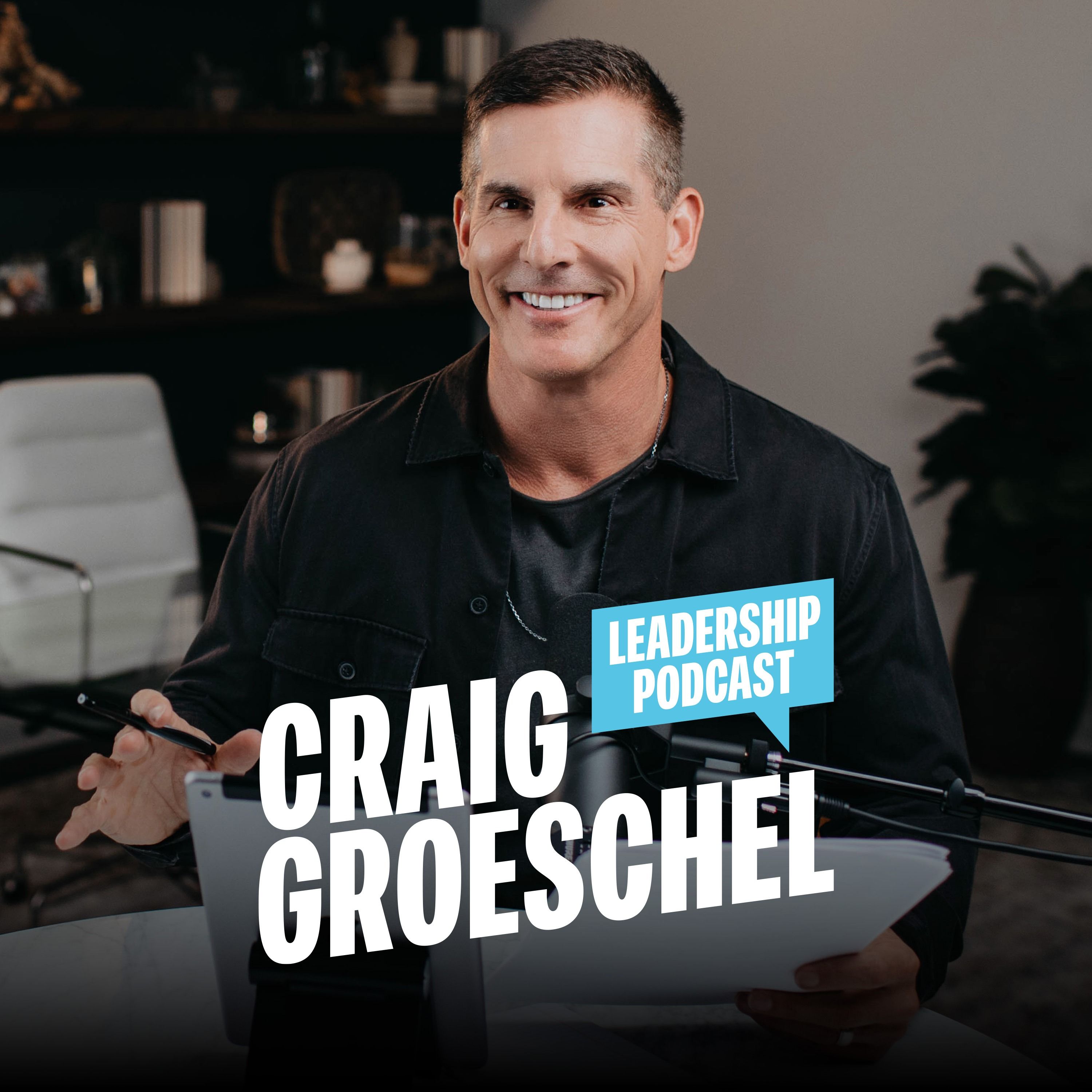
Craig Groeschel Leadership Podcast
Life.Church
Win At Home First
Cory M. Carlson
Wealthy and Well-Known Podcast
Rory & AJ Vaden
THE ED MYLETT SHOW
Ed Mylett | Cumulus Podcast Network
The Burn Podcast by Ben Newman
Ben Newman
GrowLeader Podcast with Chris Hodges
Chris Hodges