
The Uncommon Leader Podcast
Are you ready to break free from mediocrity and lead an extraordinary life? Join us on The Uncommon Leadership Podcast as we explore the power of intentionality in personal and professional growth. Our podcast features insightful interviews with inspiring leaders from all walks of life, sharing their stories of overcoming challenges and achieving greatness.
Discover practical strategies to:
- Think positively and cultivate a growth mindset
- Live a healthy and balanced lifestyle
- Build your faith and find inner strength
- Read more and expand your knowledge
- Stay strong in the face of adversity
- Work hard with purpose and passion
- Network effectively to build meaningful relationships
- Worry less and focus on what matters
- Love always and make a positive impact
In each episode, we'll dive into relevant leadership topics, share inspiring stories, and provide actionable steps you can take to elevate your life. Whether you're a seasoned leader or just starting your journey, The Uncommon Leadership Podcast offers valuable insights and practical guidance to help you achieve your goals and live your best life.
The Uncommon Leader Podcast
5 - Patty Hamilton - Connect, Communicate, CARE!
Use Left/Right to seek, Home/End to jump to start or end. Hold shift to jump forward or backward.
Welcome back to the Uncommon Leader Podcast - Episode 5. You are going to appreciate this interview with Patty Hamilton!
I narrow her chat down to 4 C's of UnCommon Leadership:
- Help new leaders to reduce the Complexity of their role
- Connect with ALL team members at all levels
- Communicate reality
- CARE - Patty narrows down the most powerful attribute in her top bosses and it was that they cared.
You can connect with Patty on LinkedIn https://www.linkedin.com/in/pattyhamilton/
To subscribe to the Uncommon Leader podcast or catch up on past episodes: https://theuncommonleaderpodcast.buzzsprout.com/
Until next time let's go and Grow Champions.
Thanks for listening in to the Uncommon Leader Podcast. Please take just a minute to share this podcast with that someone you know that you thought of when you heard this episode. One of the most valuable things you can do is to rate the podcast and leave a review. You can do that on Apple podcasts, or rate the podcast on Spotify or any other platform you listen.
Did you know that many of the things that I discuss on the Uncommon Leader Podcast are subjects that I coach other leaders and organizations ? If you would be interested in having me discuss 1:1 or group coaching with you, or know someone who is looking to move from Underperforming to Uncommon in their business or life, I would love to chat with you. Click this link to set up a FREE CALL to discuss how coaching might benefit you and your team)
Until next time, Go and Grow Champions!!
Connect with me
Leaders welcome back to the uncommon leader podcast. Episode five. Today, I get to share a recent conversation I had with Patty Hamilton, experienced multi-industry operational professional, who is also an uncommon leader. Patty shares with you some great wisdom, including the importance of equipping new leaders to handle complexities and new roles, the importance of leading by example, and the uncommon trait that the top three leaders she has had in her career shared. You'll want to listen closely. Let's do this. Patty Hamilton. It'sit's great to have you on the uncommon leader podcast. How are you? I'm great, John. Thanks for having me It's soto get in touch with you after it's been awhile, since we have needless to say work together. Well, I won't say the number of years, people can look that up on the internet. When we last worked together in Roanoke, Virginia, and not show our age too much as we get started. I'm going to start you off just like I started everybody else off on the podcast and ask you, is there some story from, from early in your life, your childhood, that still impacts who you are today as a leader? Well, yeah, I think that I would be remiss if I did not recognize my mother inthis. Okay. We lost her earlier this year at 89 and she has often been my best friend throughout life.. She had her own little team that she managed four of us and she did it with a style that I love to continue today. She talked to us a lot. She coached us a lot. There wasn't a lot of discipline except in one case. And that's my brother and that's a different story, but she gave us some really good tools to. To conduct ourselves out in the public, which was very important to her because how things looked, how we were, how we behave was very important to her. So she would say things like, when we went to the store, keep your hands to yourself. We couldn't say the word lie. We had to say story. Cause that was like the curse word in our family. Phrases like, if you can't say anything nice about someone, don't say it at all. Things like that. Just phrase after phrase. Oh. Depending upon what the situation was. But in high school, I asked her to sign my, my annual, my yearbook, and I'm not sure if I asked her if she wanted to sign it. But every time I look at it, I get this same, uplifting feeling and I was kind of paraphrase it for you. It's "to my daughter aim high and success will be yours. Give respect and demand the same and, and success will always be yours". So those two things Aim high. And, just give respect in the process. But I think the one part of that that really sticks with me is to demand the same. So I always, always felt confident going into any space feeling like I belong and I gotta give her credit for that because she gave me that confidence that, If I behave like that toward people. If I gave people respect, then I should expect the same back towards me. And for the most part it's been true. That's awesome. I love that story. And first, I'm sorry for your loss and, and, and moms have a way of doing that to us. There's no doubt about it. Whether again, going back through some of those things that they've written about us, Or certainly some of those things that they said and how they stick with us. I'm not sure. I think most moms they've said, if you don't have something nice to say, don't say anything at all. I remember that from my mom and one of her messages that just always right. True to me, as well as, kill them with kindness because it's it's, it's a situation much, much like that. If you can't say anything nice, then, then probably you shouldn't say much at all. But also I also like the aim high and give respect components. And I see that in you. So it is a matter of, something that impacted you again, the time that, that I work with you as well. So. I appreciate you sharing about your mom. And I know I can tell again, based on who you are, that she's had an impact on you. That's pretty cool. Well, thank you for sharing. And let me move now into maybe the, what, the, what the essence of the podcast will be aboutand kind of speaking to our audience about the leadership traits. And, one of those ways is how we learn things when we're young and that those stories are always big. Now, as I said at the start, it's been several years since we've worked together. We've stayed a little bit connected on LinkedIn and through some conversations, but you look over the years since it's been since then, how have you continued to be a lifelong learner in your leadership journey? Tell me, some of the things that you do, either from a habit standpoint or from a development standpoint, that you focus on A developmental standpoint things changed for me when I worked for you.. Okay. So yeah, I tell people all the time especially with some experience that, there are people in your in your path that really have an impact on how you manage others. And I was talking about my three best bosses, and I think I made reference to that one time in a communication with you. And I said, well, he doesn't really know that he's one of those people. So I've had, a great, I've had a lot of bosses because I've worked in many different industries. So, everybody's, everybody's got a boss and I'm very thankful, blessed to have worked with people that knew their craft, that, that were personable, that were respectful of me. But there's three that really kind of define. The things that I do as a leader on any job, one I'm like Higgins was my very first boss and he I mean right out of college and it's a nervous kind of guy, but he had, he managed a department where they were six supervisors at the time they were frontline supervisors and me as a manager trainee, Every Monday, Mike had a staff meeting and everybody was expected to attend even the guys from third shift where they were all men. This was 1981. So I'm really going to date myself. There was no cable on TV and there was Sunday football and people, but that was it right? Just Sunday football, Sunday football. So all seven of them. Knew exactly every play from every game on that Sunday, they talked and they laughed about it. And, I'm kind of sitting there with nothing to contribute because I wasn't a football fan and I mean, they would get so into it. You know, we'd forget, start the meeting on time. But Mike noticed that and he started giving me little trivia questions about the upcoming games. Cause we knew who was going to play next Sunday and little stuff like, the name of the quarterback, the colors. And to this day, I know that Cleveland Browns are the only ones that didn't have an emblem on their helmet. So Mike found a way to include me in his team and then. Fast forward a few years later, I worked for a guy named Howard Herbeck and we were an international sales. So there was a lot of meetings around what we did and, I was presenting. The numbers and the opportunities. And they, some of the conditions up at the customers that we were serving. And so we were in a lot of meetings and one day coming out of those meetings Howard came to my office and it's like, lightly. Politely shut the door. So I knew something was up. And he said to me, Patty, the really good at presenting the information and the meetings they're always accurate. Everybody likes to hear what you have to say, but you're not returning that to others. He says, sometimes you can give a person a look that makes them. That's just, that looks like that's the stupidest question in the world. Quote, unquote. I was so shocked. I was absolutely busted because truthfully I did think that's where this question in the world. Right. He called me on it and he didn't make a big deal about it. He just gave me some constructive feedback. And so he criticized me, and in the right way. And then I met you and yeah, I, I, I was blown away when you gave me your ticket to go to see John Maxwell. And I'm not sure what the circumstances were that, I mean, you have this ticket before I even started working for you. You had made all the arrangements. I think there were two people going and one day in a management or leadership meeting, you offered me your ticket. I remember trying to give it back. I remember John to say, I know you want to go to this, this event because it was an opportunity to not only see a John Maxwell in person, but to, to get to meet him. So The impact of that. When I got to meet him, it really hit me that, when he stood there and shook my hand and wrote in my book, I was like, John Gallagher just sacrifice this opportunity for me. So as I look back on it, those three occasions stand out to me because, what are you three have in common? Mike Cared enough to include me in the team. Howard cared enough to give me constructive feedback and you cared enough to sacrifice for me. And it goes back to that saying from Theodore Roosevelt. People don't care how much they know until they know you care. And I tried to find a way to let my. Teams know how much I care. So that changed me completely because before that, I was always trying to get the work done, trying to meet the goals, trying to make sure I deliver it on my prompts. I love that. As I was summarizing and taking some notes, I'm being inclusive and on giving and receiving feedback and even acting from that feedback, as you say, as tough as it may be. And, and then that sacrifice, frankly, as you talked about that, that story started to come back to me and you're right. I don't know why he gave you that ticket and you did get an autograph from me and I didn't get to meet him, but I did care. Absolutely. No, but that, I mean, that, that difference in when. I know the whole theme of the uncommon leader is one that can do some of those things, but also show that they care for the person as well. Get results, demand, respect, excellence, and people know that you cared about them.Those are the ones that remember that story. I know, I know I've told this story, I think on the, on the podcast before, as well as people, people won't remember what you said kind of, or what you did, they'll remember how you made them feel. And you can hear that as you go through and listen to your story. So thanks for sharing that. I'm sure you've used that as you've gone forward in your leadership journey. Which is pretty cool. Well, and again, not that I teed it up to talk about me, but I am glad that I was one of the three, no doubt about it. I'm sure I was on the top of the list, but we were just talking about in timing I did them in order of progression! But not, I look back on that and, and I think, oh my gosh even where I was in my leadership journey, how far I had to go in my journey was, was important. How much I've learned from individuals like you. So it's been, it's been really cool as I've gone forward. Okay. So when I read and, dug into some of the things you told me about what you have going on, and one of the things you, you touched on with. Was that you were interested now in, in writing a book. And so I want to dig into that just a little bit from the standpoint of, first of all, why, why would you want to write a book in terms of the work that goes into writing a book? But secondly, really? What, what is the story that you want to tell, or what is the reason for your book and who are you going to reach with that book? Well, I didn't know, it would be difficult writing a book. I mean, I love to read, I've got a very nice bookshelf and I'm looking at yours and I think we have the same set of encyclopedias doesn't everybody, and, I just had no idea I started writing. I took these notes that I'd been gathering and I started writing and more and more, it began to point in the direction of helping frontline leaders with all of the complexity that they're dealing with. And not to run away from those people concerns leaders that we promote from within the organization, typically have those technical skills that they can apply on the job. And then they found out about the other 10 things that will later as responsible for doing the paperwork. Going from one person to another and making sure that everybody is on the same page and getting things done. The interruptions I think if you ask any frontline leader what's frustrating or when they're frustrated, how do they feel about their, their role? And I'm sure they'll say, in, in some ways it's too much. I don't have enough time. I don't have enough people. We always hear that. And, and, and if people would just do what they're responsible for doing well, that is the leadership role. So they are frustrated with the terms of their position. And obviously there's some disconnect there between what they expected and what the reality is. So working within that gap I would love to catch leaders before they agree to do those types of jobs because I, I think the reality needs to be communicated. That's why I'm thinking my writing might be more in line with a more educational setting as opposed to within an organization. But then there are a lot of people that are already in the role that are struggling to make all of those things work and they can work. You don't have to be perfect at everything. One of the things that, I tell people is, use your strength to shine and just do what you can on those other things. Now, hopefully those other things, aren't like major pieces of the job, but I think everybody brings a strength to the role that they can parlay into. Hey, this is who I am in this role, and I'm great at this. And I work those other things, diligence. I love that. So have you listened to it? I mean, for, in one of the very first things you said, cause that's really what I want to talk about. You did a really nice job painting a picture of, of the problem and these folks that are new in these roles, they need someone to help tell them what they're getting into to begin with. Right? So the first thing is like, if I list this, this set of things that are going on at the complexity, not to run away, you're not going to have enough time, we're going to be too many meetings. All these things they might say. I dunno. I don't know if I want that, but, but what I'm hearing you say is no, no, no. You've been recognized for your strengths and we believe you can, you can make an impact. So what, let me communicate rally to first, first and foremost, until you tell you what's really going to happen. Think, knock you out of the cloud kind of thing right after you celebrate for a little bit, but then other, yeah. And something, that we read often, we don't hear, we don't internalize enough is to focus on your strengths. And so, do you have, I'll ask, I mean, those are, those are two potential solutions. Do you have what I would say is like a story where you you've worked with a new leader and how you've able to help successfully navigate them through that journey a little bit. Yeah. I worked with a young lady down in Gulf, port, Mississippi. She had been hired as a management trainee and our own username, Shayna. She's and I'll invite her to listen to these podcasts because the things she needs it right now Shayna had worked in the hospitality industry and found that our opportunities were limited. And somehow she connected with with, with my employer and got into the management trainee program. And she did some of her work onsite at another location. And she was looking for that quote unquote permanent position in leadership and a spot that she could grow in. So she came to work for us and go. Shane a very intelligent young lady very well-spoken very very much wanting a career that she can grow in. And she was excited to see somebody that looked like her in a role that she wanted to be in. And I think that's very important for, for there to be not only representation in some of these roles, but also for, for that connection, not in exactly have that, but, I was hopeful given that to, along with the young ladies that, that came through. That I've worked with in the organization. So Shannon was doing, a wonderful job in terms of getting out, they're in the hospital and looking at things that needed to be done. She wasn't very harsh or anything, but when Shannon was having a bad day, It was just so difficult to get her to come up to kind of put that behind her and say this is, this is your work that hill, that this is, that's why they call it work. I often say that you're not here to, to play around. Sometimes it's hard sometimes it's difficult. Sometimes it's easy and fun. And we try to build those things in. But she all, prior to that, she'd been kind of supporting, other managers and now she was responsible for that leadership role and it wasn't everything, that sh that she thought it was even having seen it kind of firsthand, but she worked her way through it. I Transferred out after, I mean, after about a year and she was still there working for my my successors at that location. And she did well today. What she actually did better. Without me as there on a day-to-day basis, we talked from time to time. And she, she literally got better at it because she had to get more independent with it. And last I heard she was a unit director herself at, or at another location in Alabama. So, and that's been probably, that was probably in a three to four year timeframe. That's pretty awesome. And so again, it's that, it's that newness inside of the role. I mean, as, just as I listened through and not that I was trying to think of the next thing, but I'm still hearkening back, even to those lessons that your mom taught you in terms of what you were probably modeling as well, whether you were saying them directly in the same way as but that she needed to see a model in that space and that your leadership probably had an impact. Somewhat directly, somewhat indirectly in terms of how she observed your behaviors as well. Once again, giving her feedback that she needed to hear when she was having a tough day and then, ultimately connecting with her. I mean, I, I often say that being a leader. And the processes associated with it. Those are really simple. They can give you some principles that work really well, but the application of it, the deployment of leadership is not easy, so simple, not easy. And how do you work your way through that and be persistent to make sure that you can continue to go forward. And that actually leads me into maybe. One last point, and then I'm going to give you the last word as we kind of come, come to our time when I was reading on your LinkedIn profile. And I, I was taken by the, simple philosophy that you had. It's treat people with respect, expect excellence and measure outcomes. And I do appreciate the simplicity in that philosophy that exists today. I mean, what's, what's been the biggest. Success that you want to tell a story about for your own personal leadership journey and one of those spaces that you would want to tell everyone to be, to be ready for biggest win or big and what it feels like. Right. I mean, it could be a promotion, it could be a measurement that you said an outcome that you had. What was your biggest win? Well, John, I took your job. And I think that was really. That was huge for me. So first of all, I always thought, well, you have to get experience doing what you do, and then you get a promotion within that and you take those skill sets and you you expand it or you expand upon it. Okay. So when you left the company, so you left this hole, there's a vacancy there. And some big shoes to fill. And there were a couple of lessons. If you recall, there were only four people on the leadership team and that included you. So you left this big hole of who was going to be next and you left it. Your boss at the time was new to the company. So he did not know any of us in and at that location. And he was new to the job. And literally I can remember taking a flip chart and writing down. Why I should be the next general manager of this location. And I had some help. You remember Howard? We were, we were still dating then. He said, there's no reason why you shouldn't ask for that job because I had, I often helped them a lot with some of the people leadership skills that, that in his room. And I said, I don't know anything about a blueprint. I don't know anything about, this lighting that they're over there doing other than put it in a box and I will ship it. So that was a stretch for me. And, but I also knew that from that I desired it and that I could handle it from a people connectivity's stamp. So it was great when I got the job. Yeah. It was a little afraid to ask, but I did ask, I stepped up to ask it because I belong in the room. People applaud it when they announced it, it was like being a rock star. And then I went about the business of trying to learn all that I could about lighting and blueprints and so forth that I forgot to go really connect with the assembly work. And, somebody had to tell me that look, yeah, That's really when I first learned that people don't care how much, you know, they don't know, they just want to know that you care first. And so I had to step back a little bit. But that, that was such a fun time. And I, I was able to release a lot of things that I wanted to control in the environment and to trust people, to, hold up their end of the bargain. So when I say Expect excellence. I'm not expecting perfection as much as I expect people to live up to their end of that bargain. And sometimes they'll beyond that because that's how you grow. You got to get into that stretch zone being average doesn't cut it. It just kind of keeps you status quo. And w what's the old saying if you're not growing, you're dying. So I needed people that were willing to stretch in whatever strength. Well, I love to hear that. That was, one of your big wins. And I know you've got more in your future coming up as well. And, and I told you a little bit, this is a story in an email, but when we interviewed you prior to joining the organization, it was one of those things that. I and the others that interviewed you recognize the leadership skills, such that we could teach you about lighting and blueprints. I wasn't worried about fork trucks and all those other things that associated with it, but we were excited to have that, that leadership skill that, that you showed and, and really, the courage that you showed as well in that interview process. And then to say that, you wrote down on the flip chart, why you should be that manager and you've got that role. That is pretty cool. As you go forward and I'm looking forward to seeing the book that comes out. So let me put the pressure on you to give you the last word from the interview. I've enjoyed the time today, but I'll give you the last word. And it's a question that I always end in with as well. And I'm giving you a gigantic billboard, but in your case, what I'm going to give you is a blank book cover. Okay. It's got your mantra on it or whatever that is, but, what's, what's the message that you want to get across. After all that you've talked about today, what's the message you want to get across to leaders, new leaders in roles, current leaders that will stick with them, but there was something they wanted to make sure that they remembered what Patty Hamilton said and how she made them feel. What was it? What is it? Show up, Do the work and have fun Showup, do the work and have fun, simple seven words gets it done. And I love the fun part at the end to make sure that happens. So what Patty I've enjoyed the time today? It's hard to believe how fast it went or 30 minutes how fast it went. Go through this conversation. I look forward to sharing this with others, and I know that they're going to find value in it. I appreciate you investing the time in sharing a bit of your story today, so, be well. Great. I appreciate it. And thank you so much. Well, that was fun. And I really appreciated the stories that Patty shared with us today. When I think about some of the things that she really talked about, there was a theme that came through for me, first of all, was to reduce the complexity. She talked about that challenges, that new leaders face today, and the complexity inside the organism. And how we as leaders need to either prepare or equip those leaders to be successful, or ultimately as new leaders, be sure that we are taking the opportunity to learn as much as we can. Second thing she talked about that that hit home with me was to communicate reality that second seat and make sure that people understood what the responsibilities were going to be in their new leadership role. Third C she talked about was to connect. That once you got into that leadership role, not only was it important to capitalize on your strengths, but also to be sure you're connecting with the people, not in the work area that you're leading so that they know ultimately the fourth C and the uncommon trait that she talked about in those leaders that she had identified as our top three was that they cared. And she used the quote that we so often hear. Nobody cares how much, you know, until they know how much you. If we can, if we can abide by that in our daily leadership, there's a lot of improvement that, that the world can make. So thanks again for listening today. If you liked what you heard, please share it with a friend who might need to hear this message. Go out to my website at www dot, growing champions.net/podcast and subscribe there. And you can also see some past episodes that we've had as well or subscribe and or follow us on. Podcast platform of choice until next time let's go and grow champions.
Podcasts we love
Check out these other fine podcasts recommended by us, not an algorithm.
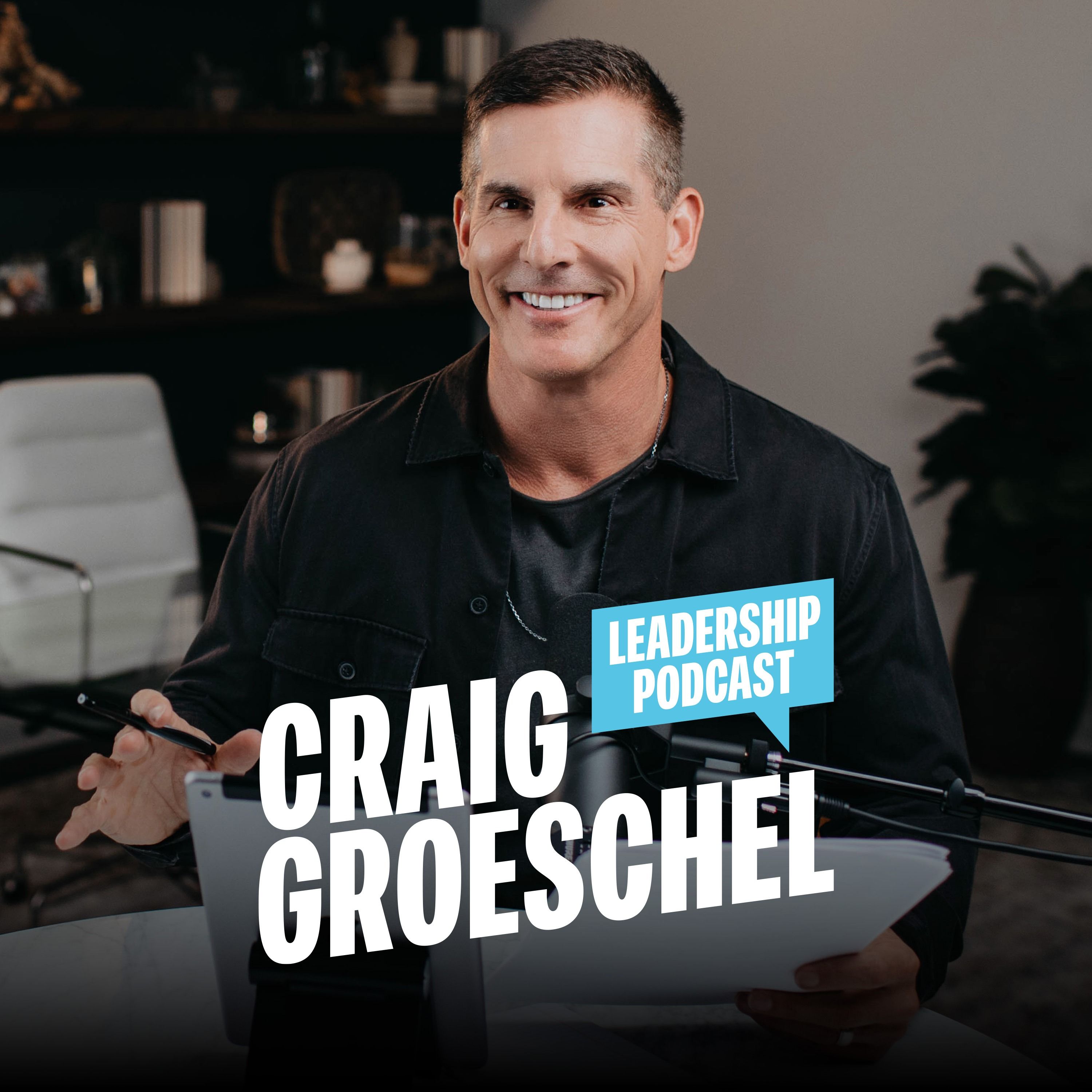
Craig Groeschel Leadership Podcast
Life.Church
Win At Home First
Cory M. Carlson
Wealthy and Well-Known Podcast
Rory & AJ Vaden
THE ED MYLETT SHOW
Ed Mylett
The Burn Podcast by Ben Newman
Ben Newman
GrowLeader Podcast with Chris Hodges
Chris Hodges